Phuket Vegetarian Festival 2026: A Grand Celebration of Faith, Shrines and Jay Food
Direct answer: The 2026 Phuket Vegetarian Festival will take place from Saturday, 10 October to Sunday, 18 October 2026. The important Go Teng pole-raising ceremony is scheduled for Friday, 9 October, marking the ceremonial welcome of the deities. The Tourism Authority of Thailand confirms these dates for the main nine-day celebration. Individual shrines may publish their own procession and ritual schedules separately. See the official 2026 festival information.
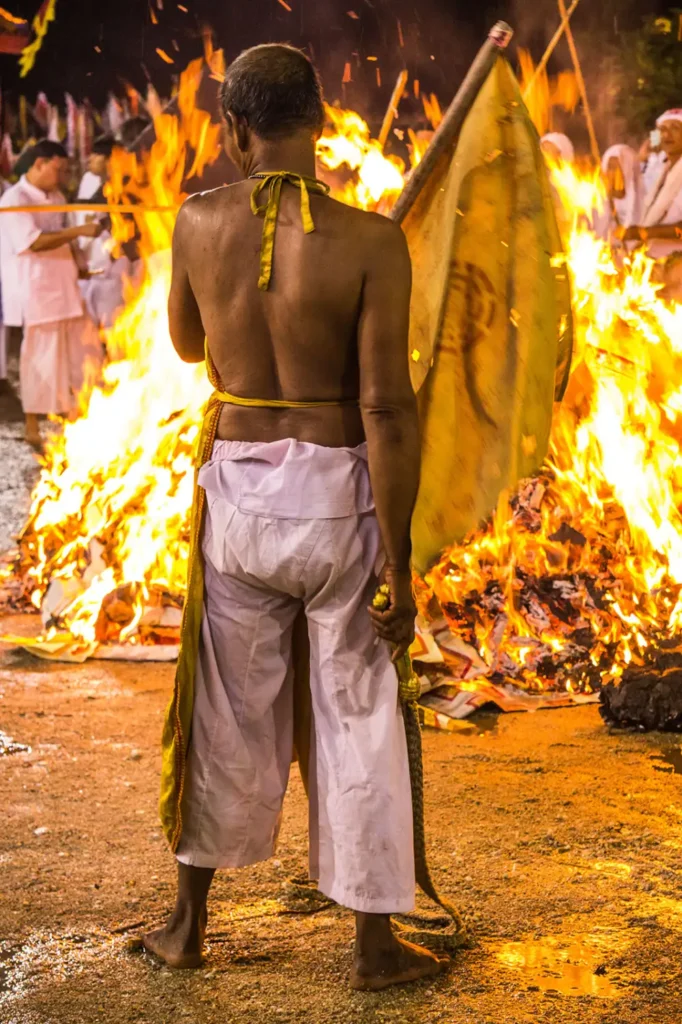
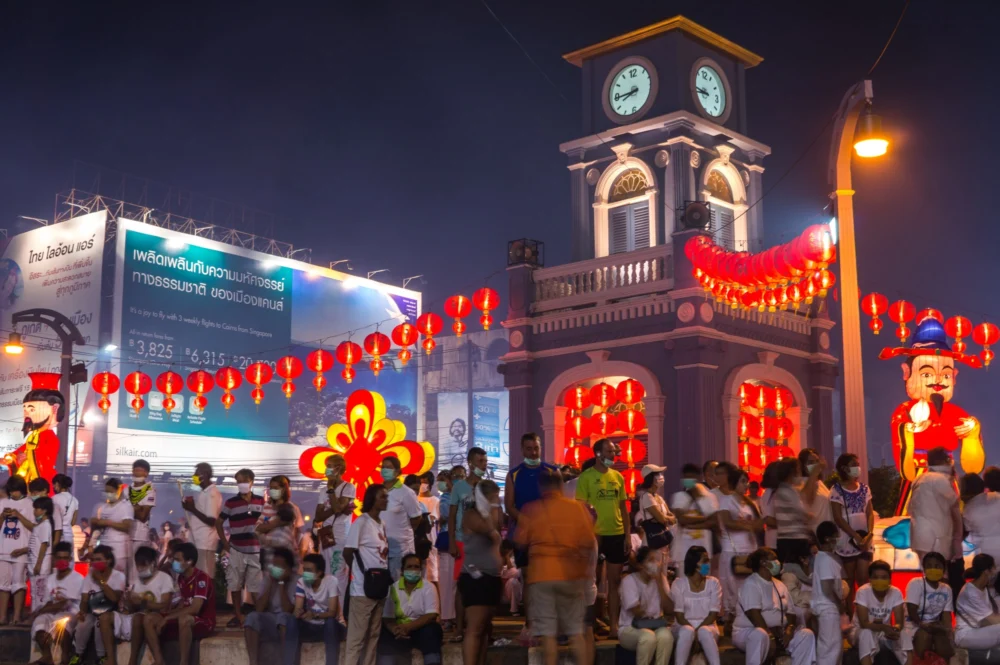
Known locally as Jia Chai, or the tradition of eating vegetables, the Phuket Vegetarian Festival is one of the island’s grandest cultural and religious celebrations. It is not simply a food festival. For Phuket’s Chinese-descended community, it is a period of purification, devotion, good deeds and respect for the Nine Emperor Gods.
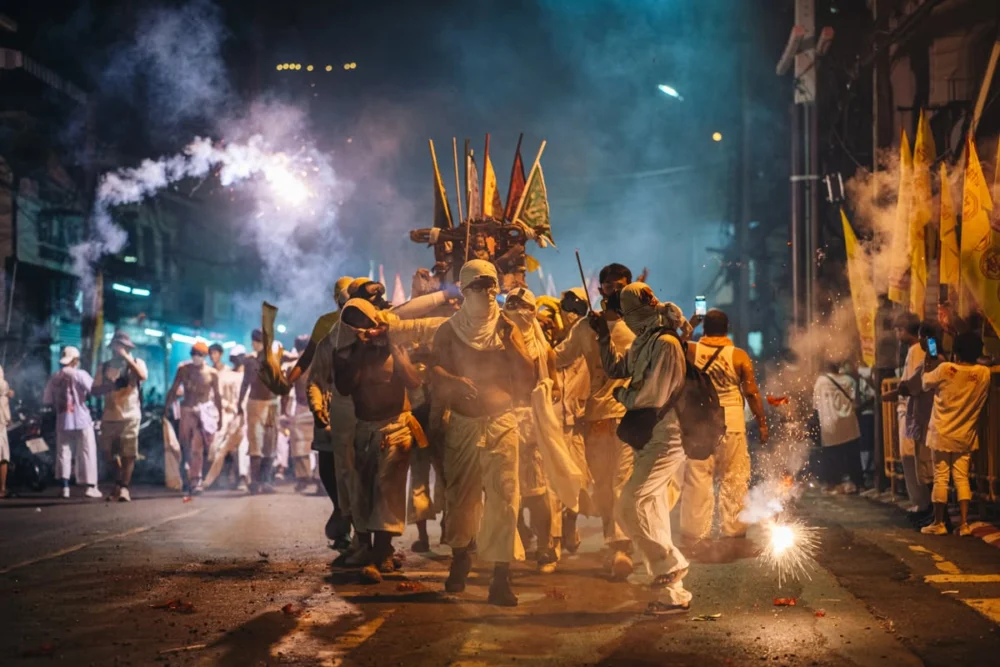
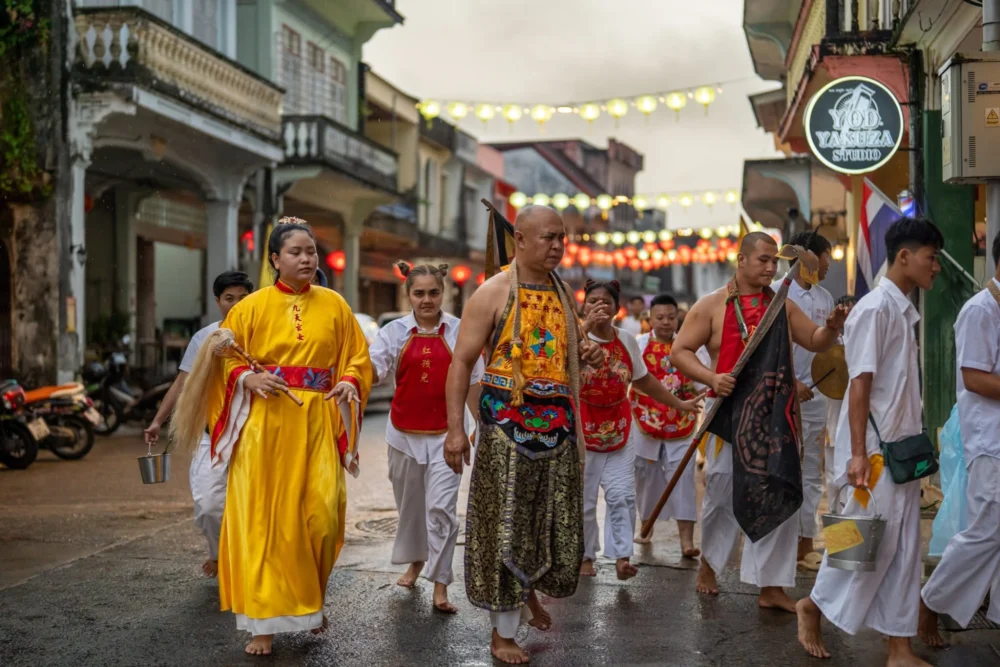
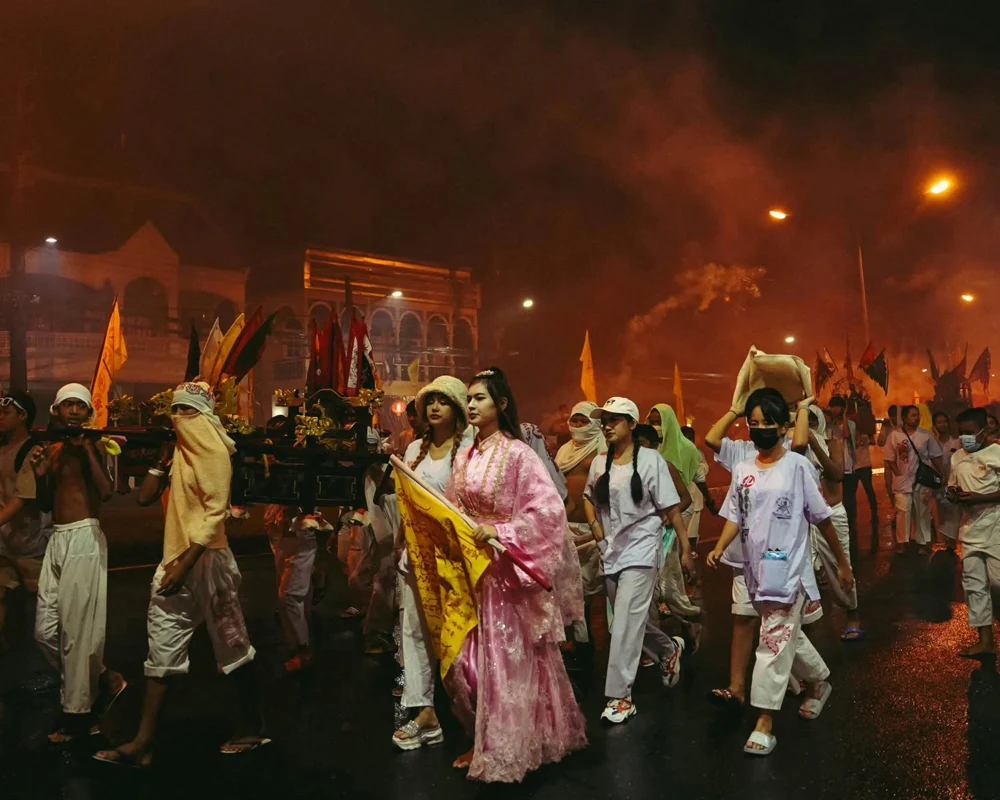
Visitors will see worshippers dressed in white, Chinese shrines glowing with lanterns, streets covered by firecracker smoke, sacred processions and hundreds of stalls preparing special jay food.
When Is the Phuket Vegetarian Festival in 2026?
| Event | Date |
|---|---|
| Go Teng pole-raising and preparatory ceremonies | 9 October 2026 |
| Main nine-day Vegetarian Festival | 10–18 October 2026 |
| Shrine processions and special rituals | Times vary by shrine |
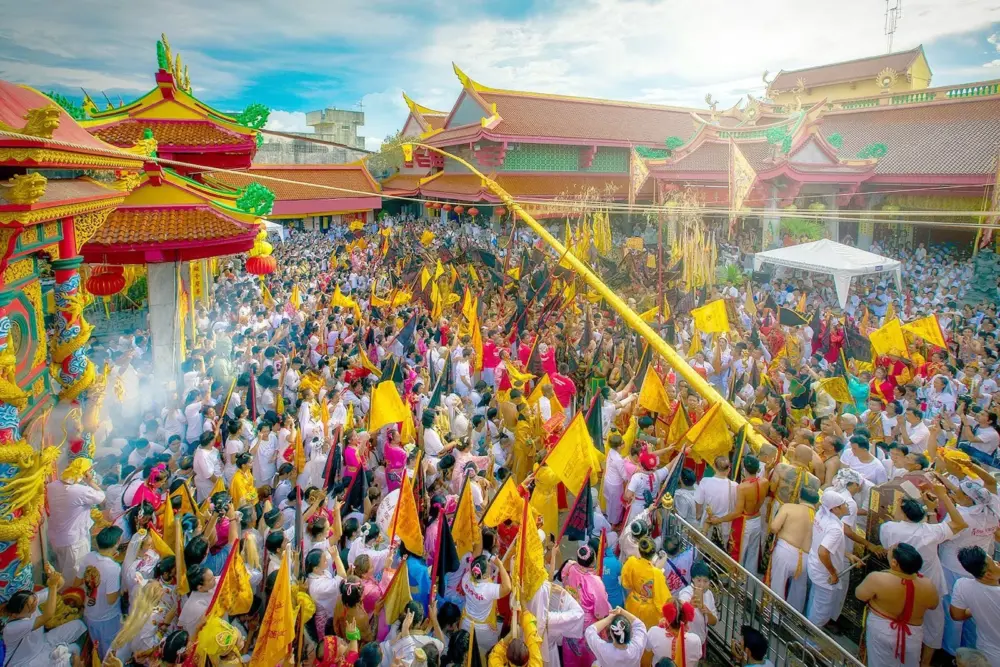
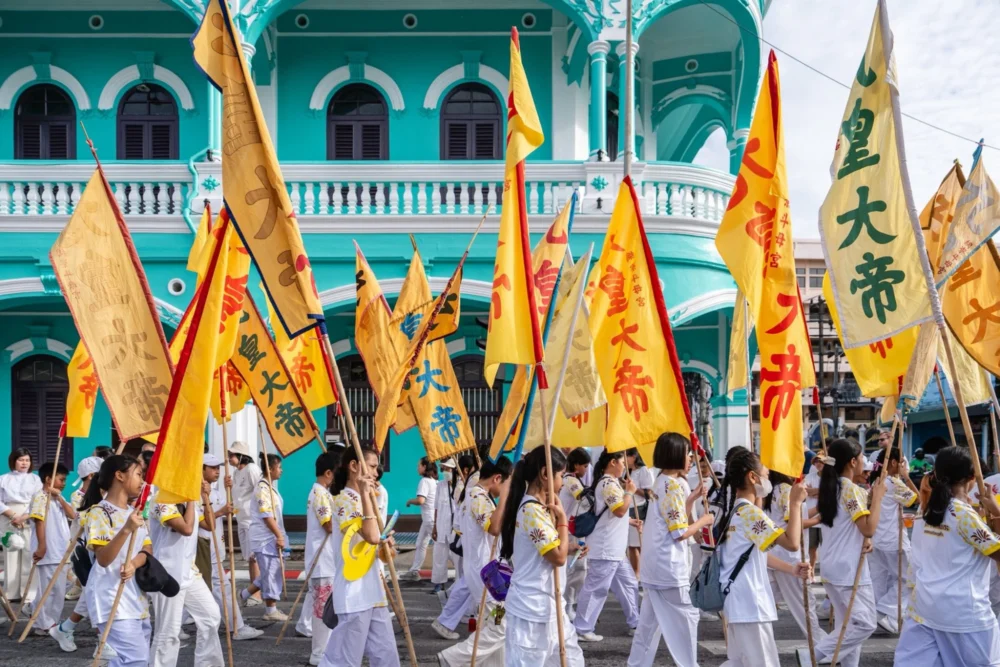
Because the festival follows the Chinese lunar calendar, its Gregorian dates change every year. Travellers should recheck the programme shortly before visiting, particularly if they want to see a procession from a particular shrine.
How Did the Phuket Vegetarian Festival Begin?
According to Phuket tradition, the festival began in the Kathu mining community during the early nineteenth century. Phuket’s tin-mining economy had attracted many Chinese immigrants, particularly people with Hokkien heritage.
The traditional story says that a visiting Chinese opera troupe became seriously ill. The performers realised they had neglected their annual vegetarian observance and rituals honouring the Nine Emperor Gods. After resuming the nine-day practice, their health reportedly improved. Local residents were impressed and began observing the tradition themselves.
This story is best understood as Phuket’s inherited cultural account rather than a medically documented event. Nevertheless, it explains why Kathu Shrine is considered the birthplace of Phuket’s festival. The tradition has continued for approximately two centuries and has become an important part of Phuket identity. Read more about the festival’s history.
In 2018, Thailand’s Department of Cultural Promotion registered Phuket’s Vegetarian Festival as part of the country’s national intangible cultural heritage.
Which Chinese Shrines Are Important During the Festival?
Although people often call them temples, the more accurate English description is Chinese shrines. Phuket has many participating shrines, but these six are among the historically important festival centres:
| Shrine | Location | Why Visit |
|---|---|---|
| Kathu Shrine | Kathu | Regarded as the birthplace of Phuket’s Vegetarian Festival |
| Tha Ruea Shrine | Thalang | An important shrine serving northern Phuket communities |
| Jui Tui Tao Bo Keng Shrine | Ranong Road, Phuket Town | The best-known and one of the busiest festival shrines |
| Lor Rong Shrine | Phatthana Road, Phuket Town | A historic community shrine near central Phuket Town |
| Bang Neow Shrine | Phuket Road, Phuket Town | Known for major street processions and ceremonies |
| Sam Kong Shrine | Yaowarat Road, Phuket Town | Also known as Lim Hu Tai Su Shrine |
Why Is Jui Tui Shrine So Famous?
Jui Tui Tao Bo Keng Shrine, commonly called Jui Tui Shrine, is on Ranong Road near Phuket Town’s fresh market. Its Chinese name is commonly written as 水碓斗母宫.
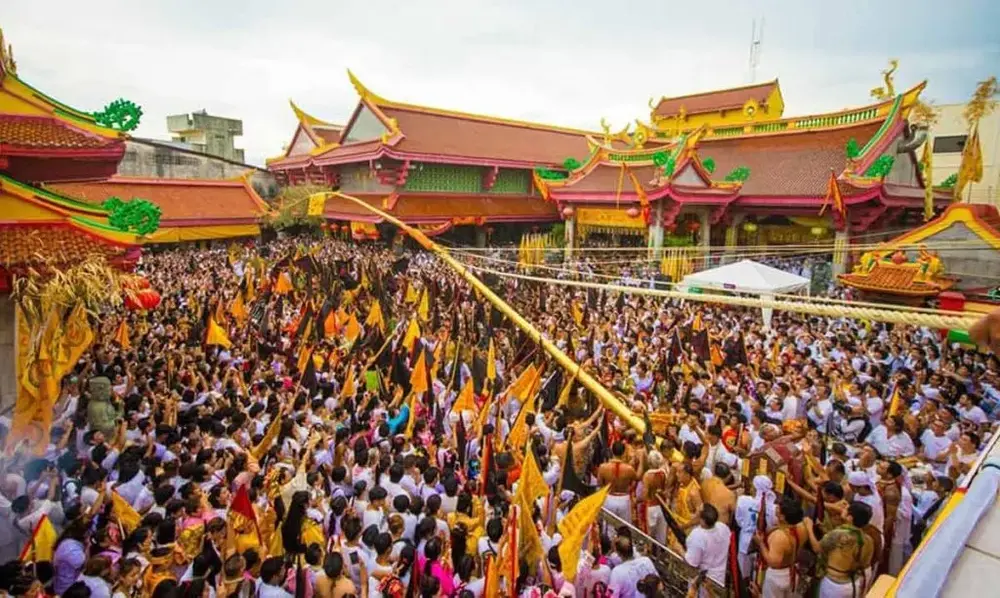
It is one of Phuket’s most prominent Chinese shrines and a major centre of the Vegetarian Festival. During the celebration, large numbers of worshippers come to pray, make offerings and join ceremonies. Processions connected with Jui Tui can draw enormous crowds into central Phuket Town.
The shrine reportedly began as a modest structure with a thatched roof before being expanded as the number of worshippers increased. Today it is both an active religious site and a cultural landmark.
Visitors should remember that Jui Tui is not merely a festival attraction. It is a living place of worship. Dress respectfully, avoid blocking people who are praying and ask before photographing anyone at close range.
What Happens During the Festival?
- Raising the Go Teng pole and lanterns to welcome the deities
- Prayer, chanting and offerings inside participating shrines
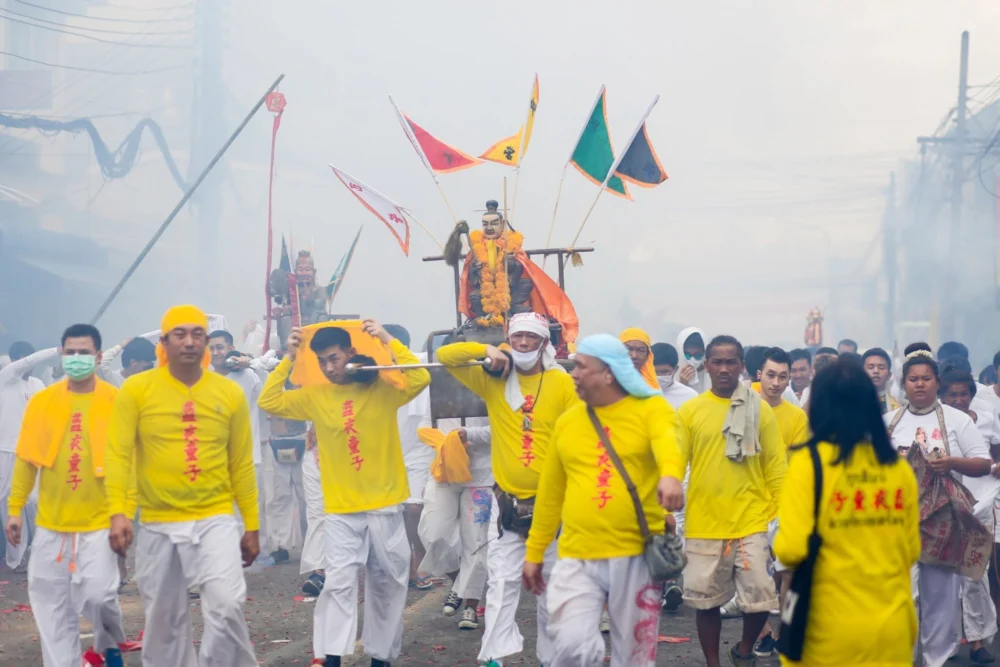
- Street processions carrying sacred statues
- Firecrackers intended to honour the deities and clear the route
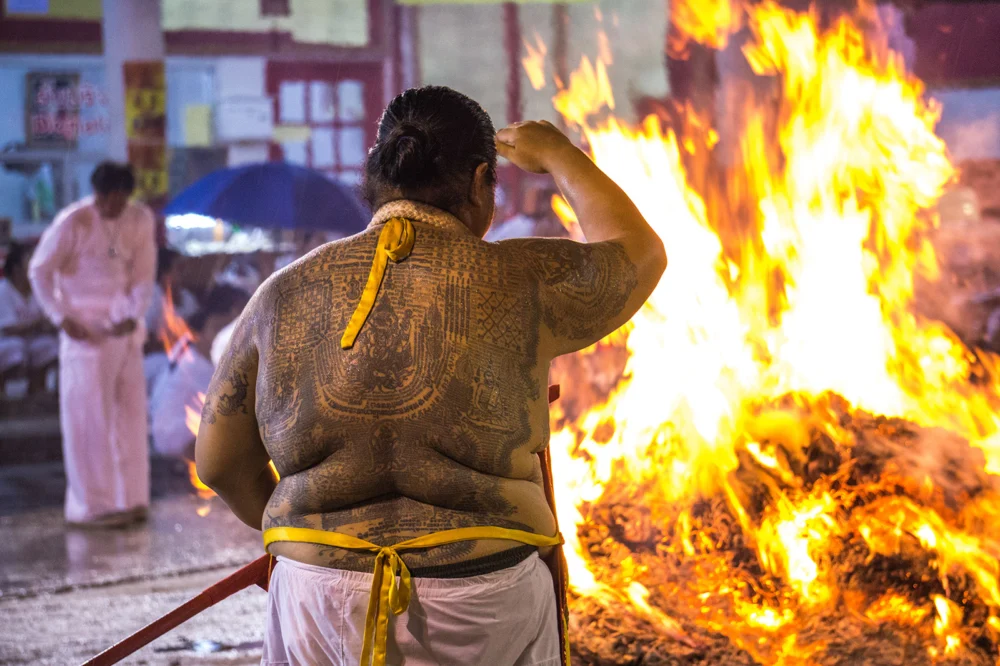
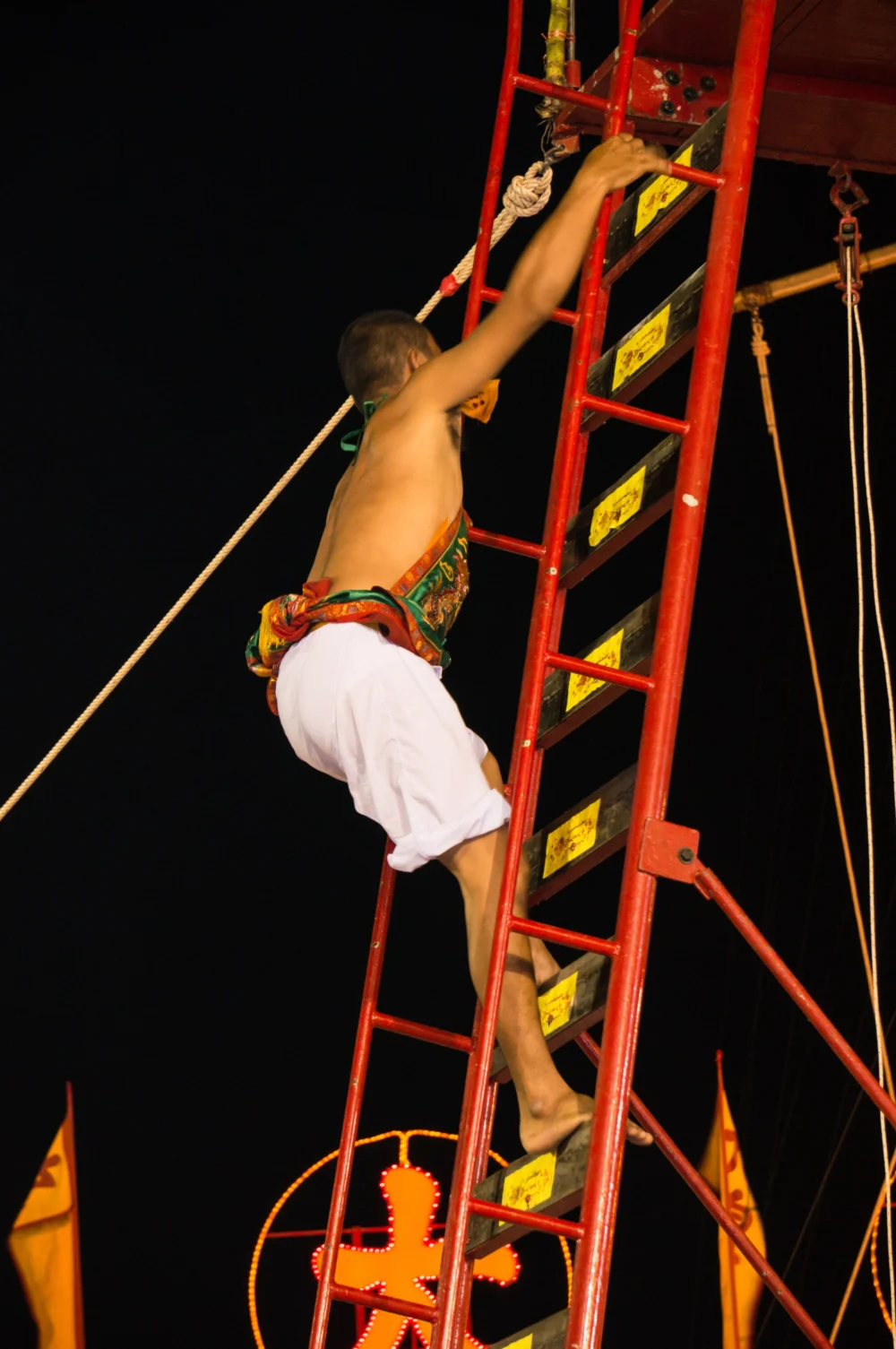
- Fire walking and climbing bladed ladders
- The appearance of spirit mediums known as Ma Song
- Wearing white and following rules of physical and spiritual purity
- Preparing and sharing vegetarian food
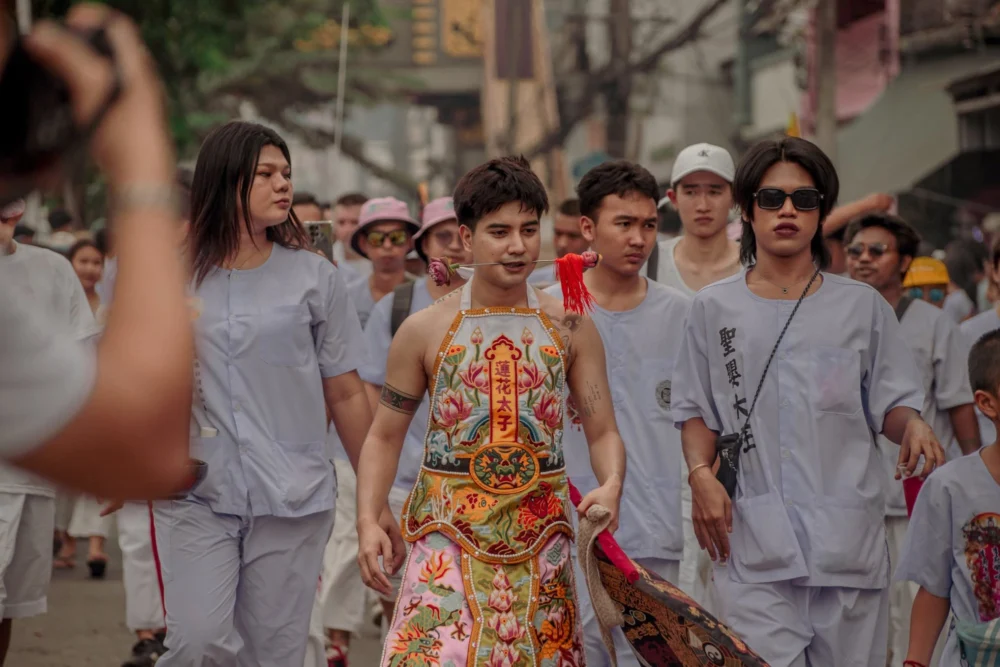
Ma Song are devotees believed to act as mediums for the deities. Some perform intense rituals, including piercing their cheeks with sharp objects.
Content warning: These rituals can be graphic. They are sacred expressions of faith rather than staged entertainment. Visitors should remain at a respectful distance, follow instructions and avoid obstructing participants.
What Is Phuket Festival Vegetarian Food Like?
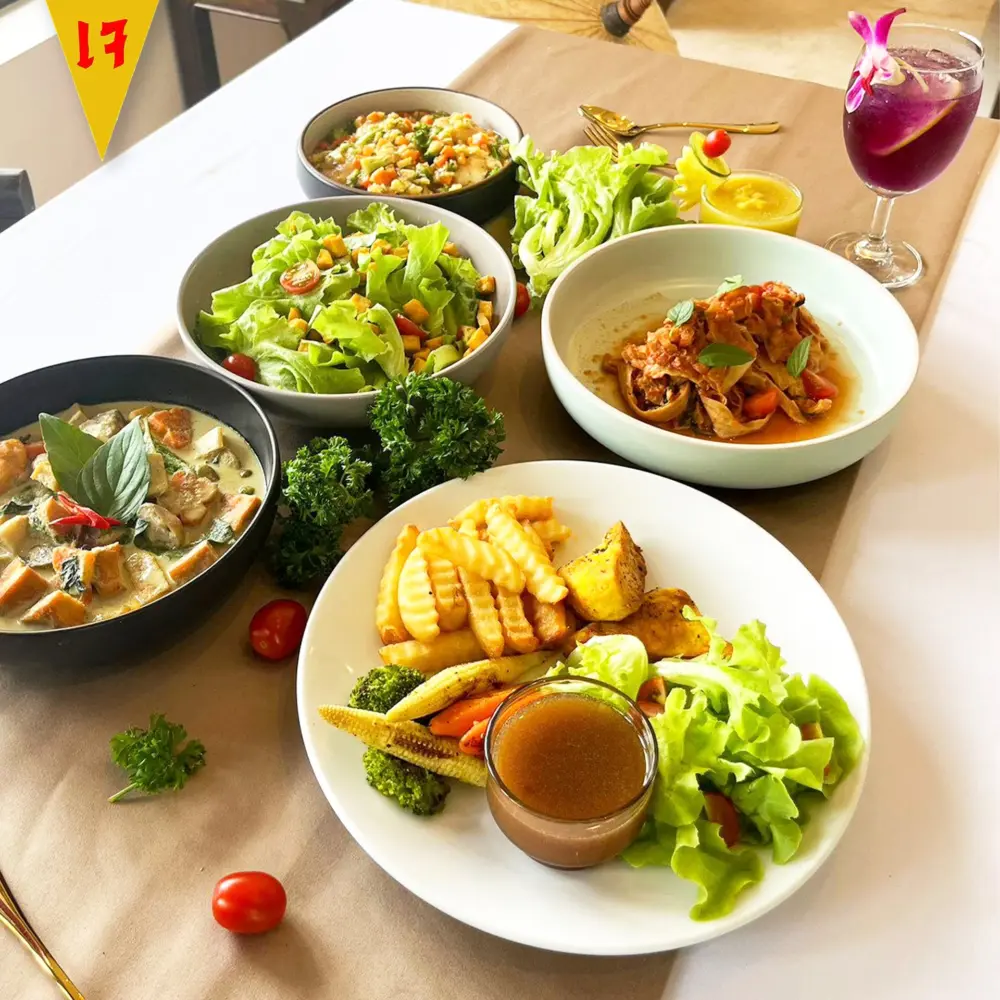
The Thai word เจ — jay refers to food prepared according to the festival’s purity rules. It is generally stricter than an ordinary vegetarian meal and is closer to vegan food.
Strict jay dishes normally contain:
- No meat or poultry
- No seafood
- No eggs or dairy products
- No fish sauce, oyster sauce or animal fat
- No alcohol
- No strong-smelling alliums such as garlic, onions or chives in kitchens following the complete ritual rules
Look for a yellow flag carrying the red เจ symbol. This indicates that a stall or restaurant is serving festival vegetarian food.
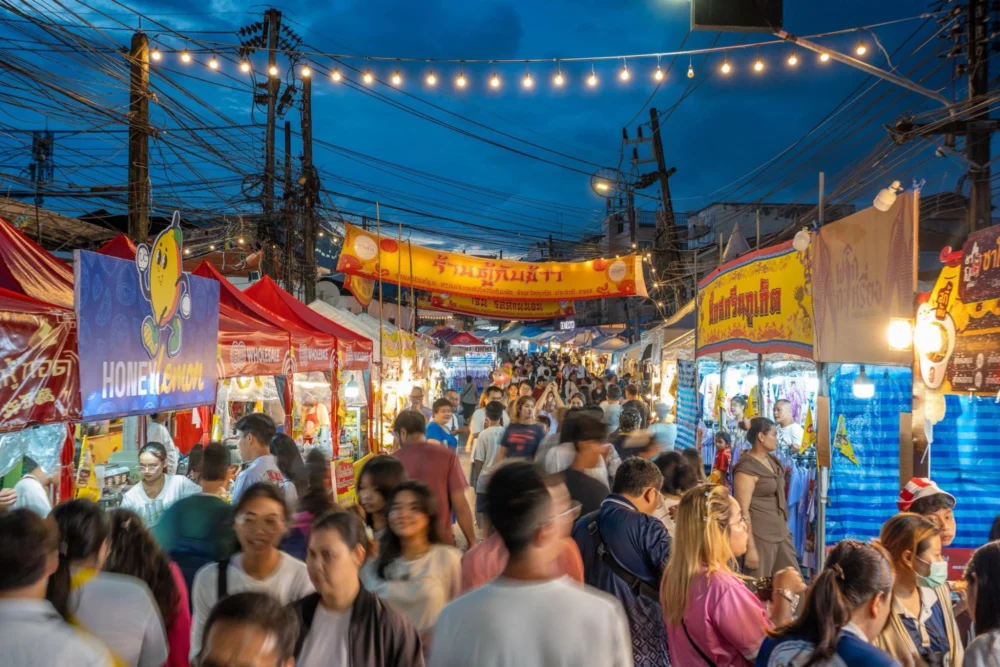
Popular dishes may include noodle soups, curries, fried noodles, tofu, mushrooms, spring rolls, taro, vegetable dumplings and plant-based versions of familiar Thai-Chinese dishes.
Many stalls also use mock meat made from soy or wheat gluten. Travellers with allergies should ask about ingredients because “vegetarian” does not automatically mean gluten-free, nut-free or safe from cross-contact.
Practical Advice for Visitors
- Arrive early because major processions may begin in the morning.
- Expect traffic restrictions around Phuket Town and participating shrines.
- Wear comfortable closed shoes; streets may contain firecracker paper and ash.
- White clothing is respectful but not compulsory for ordinary observers.
- Bring ear protection, especially for children and sound-sensitive travellers.
- Keep away from firecrackers and never step into a moving procession.
- Ask permission before taking close-up photographs.
- Do not touch altars, religious objects or offerings.
- Consider whether graphic rituals are suitable for young children.
- Check the latest shrine timetable before travelling.
For exploring the surrounding area, see our Phuket Old Town walking guide. During major road closures, our Phuket public transport guide may help with alternative travel arrangements. Anyone driving should also review the Phuket driving and parking rules.
Frequently Asked Questions
What are the Phuket Vegetarian Festival dates for 2026?
The main festival runs from 10 to 18 October 2026. The Go Teng pole-raising ceremony is scheduled for 9 October.
Is the Phuket Vegetarian Festival only about food?
No. Vegetarian food is an important part of the observance, but the festival is primarily a religious and cultural period involving purification, worship, processions and sacred rituals.
Which is the most famous shrine?
Jui Tui Shrine on Ranong Road is the best-known shrine for visitors and one of the busiest centres during the festival. Kathu Shrine is especially important because it is considered the festival’s birthplace in Phuket.
Is festival food vegan?
Most properly prepared jay food excludes all animal products and is therefore vegan-like. Strict kitchens also avoid several pungent vegetables. People with allergies should still confirm individual ingredients.
Can tourists enter the shrines and watch the processions?
Yes, visitors are generally welcome when they behave respectfully, follow local instructions and avoid interfering with worship or procession routes.
Is the festival suitable for children?
Food areas and some shrine visits can be family-friendly, but facial piercing, fire walking, loud firecrackers and crowded processions may be frightening or unsuitable for young children.
Final Thought
Phuket’s Vegetarian Festival is one of the clearest expressions of the island’s Chinese heritage. Come for the food if you wish—but take time to understand the faith, history and community that give this extraordinary festival its meaning.