Wat Chalong Phuket: Inside the Island’s Most Revered Temple, Its History & Sacred Traditions
Direct Answer
If you want to understand the cultural and spiritual side of Phuket beyond its beaches, Wat Chalong is one of the most important places to visit. Officially known as Wat Chaiyathararam, it is Phuket’s largest and most visited Buddhist temple, with a history reaching back to the early 19th century.
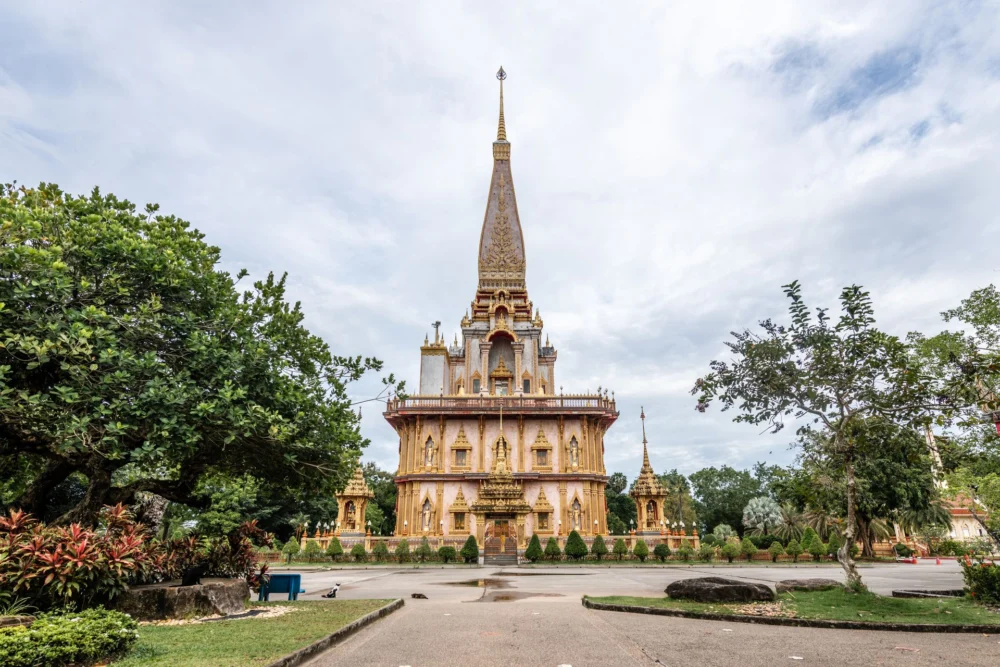
The temple is especially remembered for the revered monks Luang Pho Chaem and Luang Pho Chuang, its connection with Phuket’s turbulent tin-mining era, and the 60-metre chedi that shelters a sacred fragment believed to be from the Buddha.
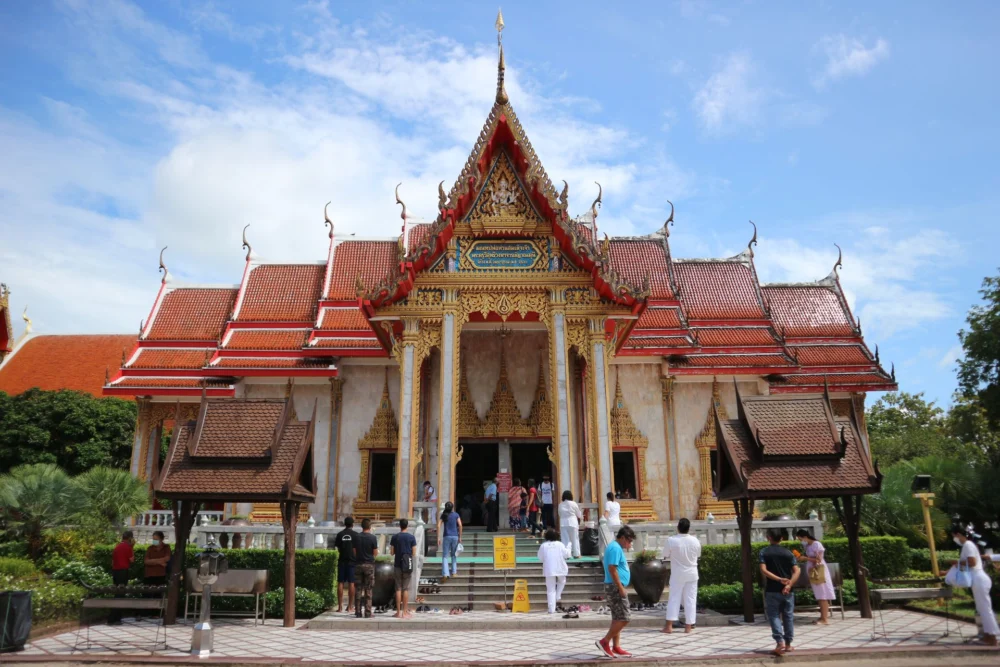
Wat Chalong is not simply a sightseeing attraction. Local people still come here to pray, make merit and pay respect, so the best way to visit is to treat it as a place of worship first and a photography destination second.
How Did Wat Chalong Become So Important to Phuket?
Wat Chalong was established in the early 19th century and gradually became closely connected with the surrounding Chalong community.
One of the most important chapters in its history came during unrest connected with Phuket’s tin-mining era in 1876.
Historical accounts remember two respected monks, Luang Pho Chaem and Luang Pho Chuang, for supporting the local community during the conflict. Their knowledge of traditional herbal medicine was also used to care for injured people.
Luang Pho Chaem in particular became one of Phuket’s most respected religious figures. His reputation continued long after the events of the 19th century, and visitors today will still see people paying respect to the revered monks inside the temple.
This history is one reason Wat Chalong feels different from a modern sightseeing landmark: its importance developed through the relationship between the temple, local residents and important events in Phuket’s past.
Meet the Three Revered Monks in the Wax-Figure Room
One easily missed stop at Wat Chalong is the reconstructed raised Thai wooden residence dedicated to the temple’s former abbots. Inside is a small air-conditioned display room that feels quite different from the larger prayer halls outside.
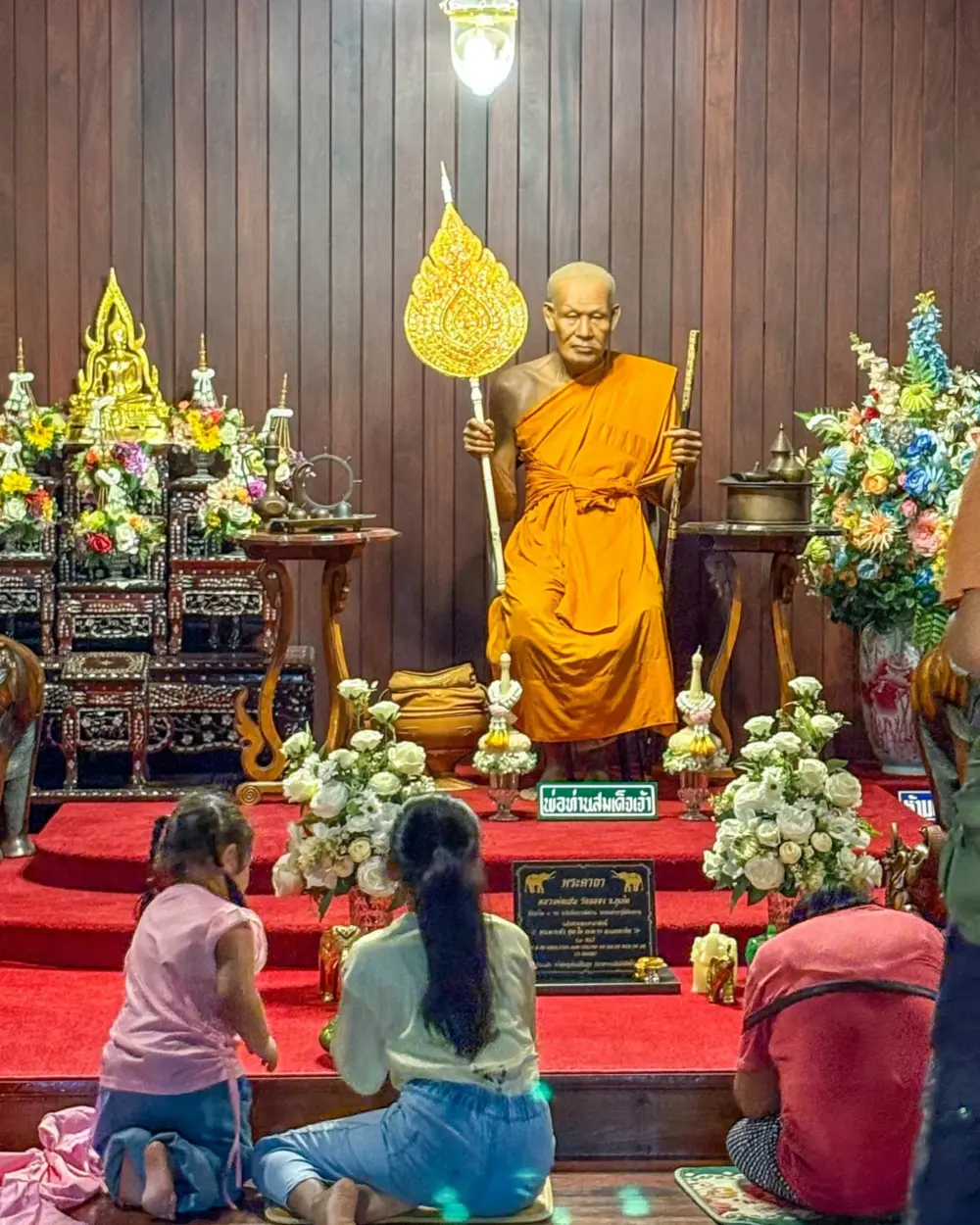
Inside are lifelike wax figures of three revered former abbots: Luang Pho Chaem, Luang Pho Chuang and Luang Pho Gluem (also romanized as Kleum). Seeing them together gives visitors a much more personal connection to the monks whose stories are part of Wat Chalong’s history.
The wooden residence also preserves old monastic items, furniture and other objects connected with the temple’s past. It is a small stop, but worth looking for—especially after learning about Luang Pho Chaem and Luang Pho Chuang and their importance to the Chalong community.
The 60-Metre Chedi: Wat Chalong’s Landmark
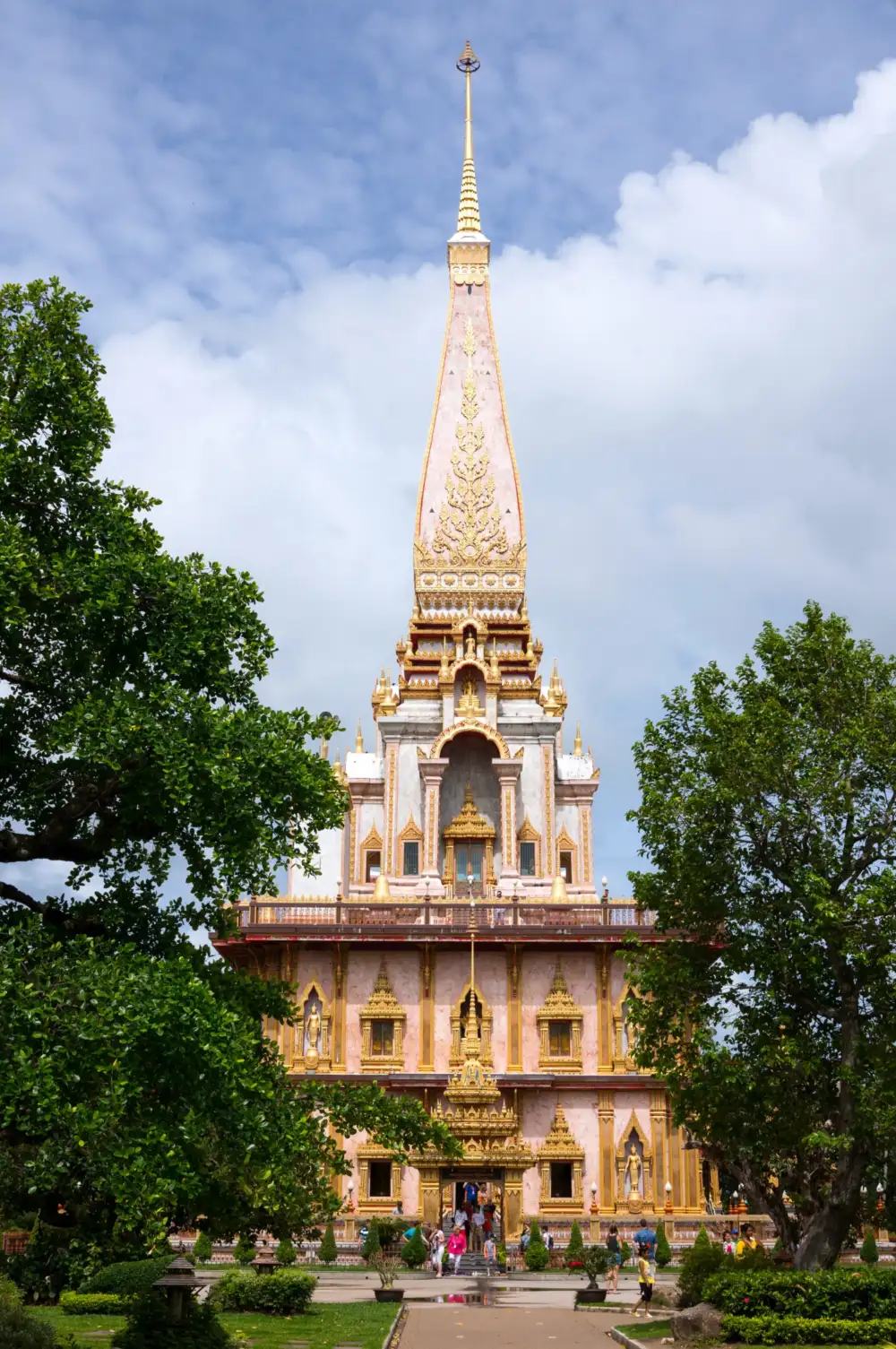
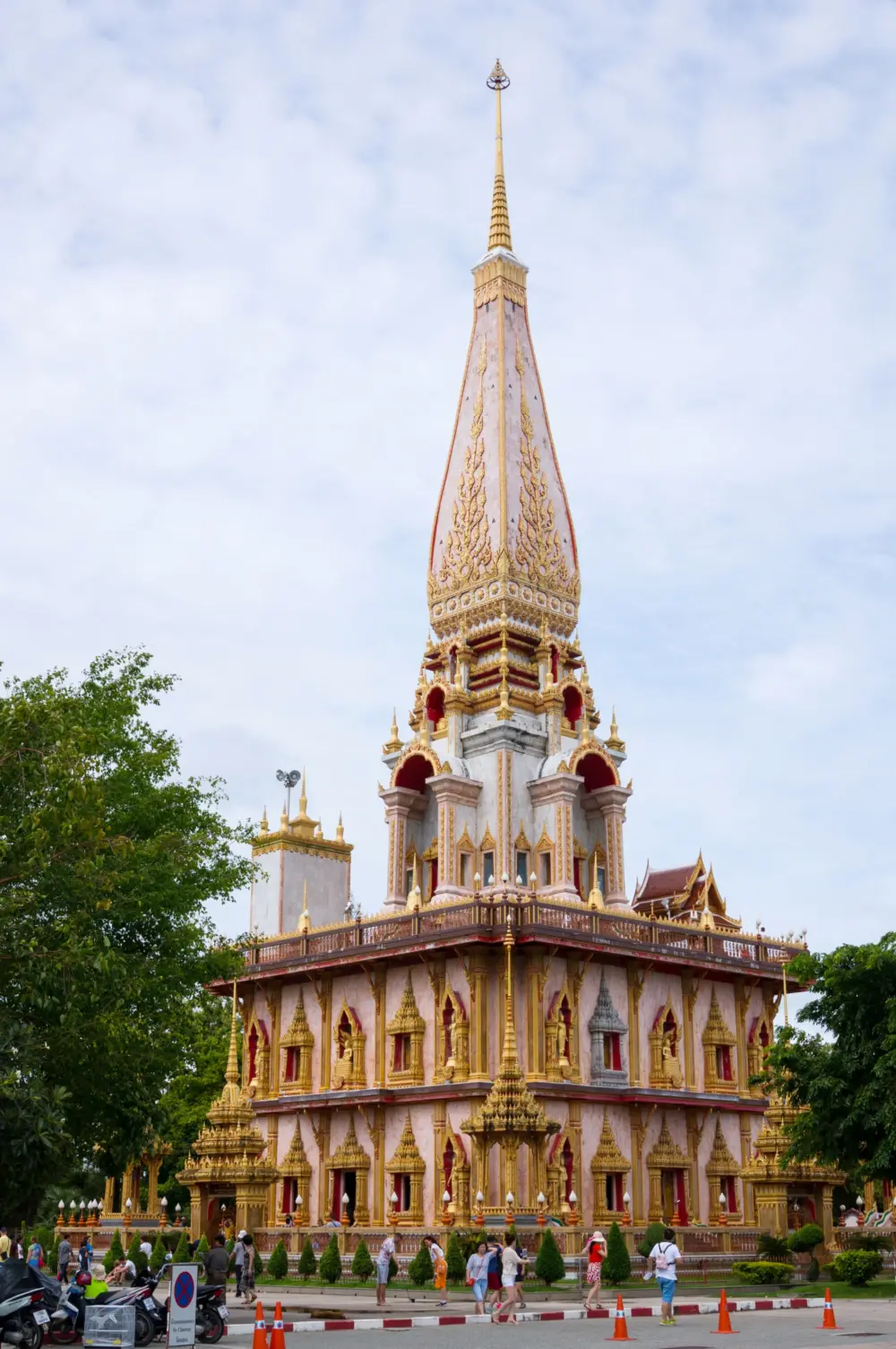
The most recognisable structure at Wat Chalong today is its approximately 60-metre-high chedi.
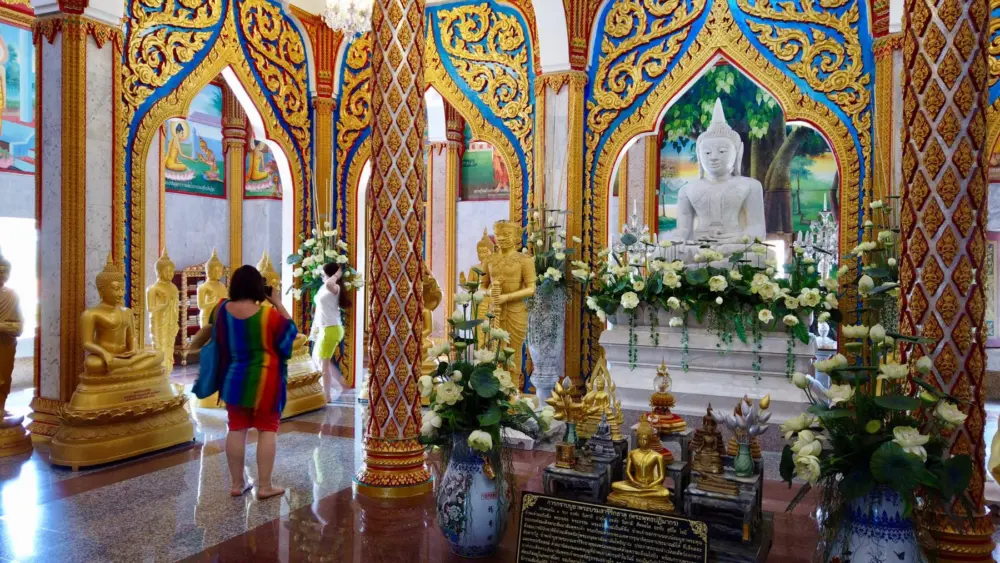
Inside is a sacred fragment believed to be from the Buddha’s bone. Visitors can walk through several levels of the building, where walls and ceilings are decorated with paintings illustrating episodes from the Buddha’s life.
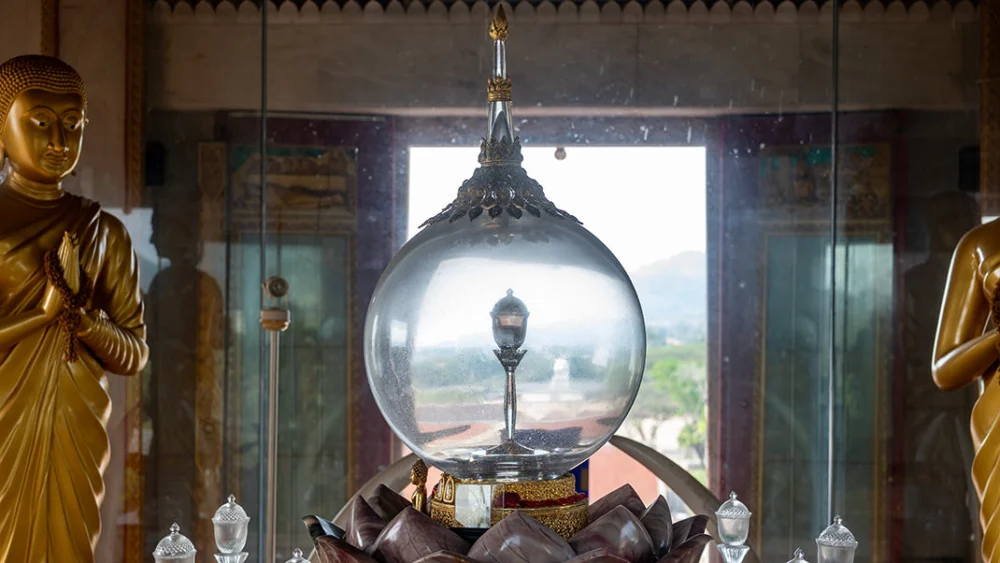
Golden Buddha images appear throughout the interior, while the upper levels provide a different perspective across the temple grounds.
Do not rush straight to the top. The murals, statues and architectural details inside are an important part of the experience.
Why Do People Apply Gold Leaf to the Statues?
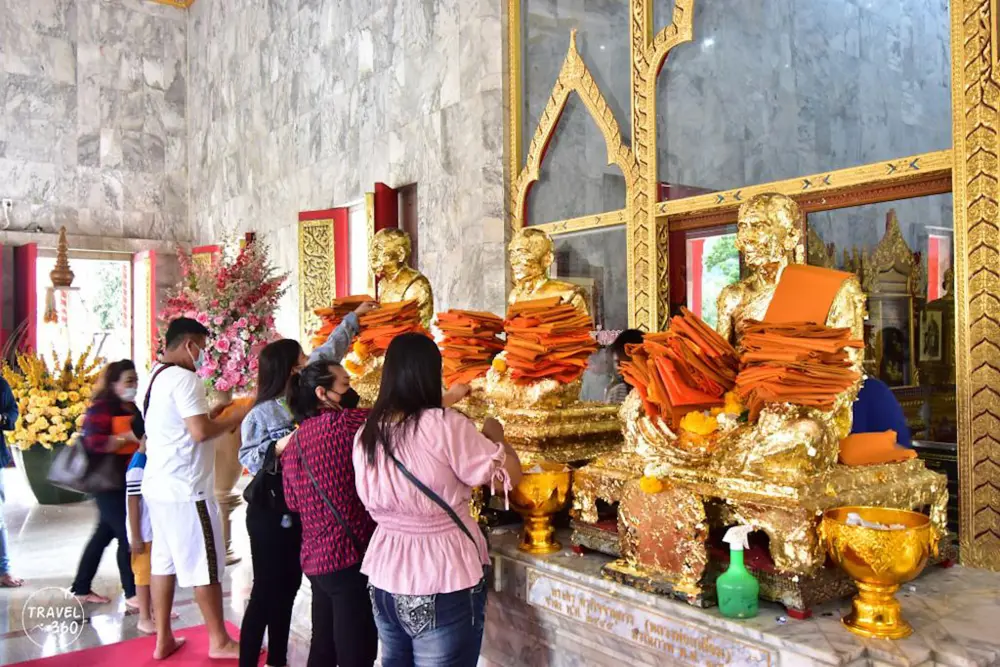
Inside the temple, you may see worshippers placing small pieces of gold leaf on statues of revered monks.
For visitors, it can be fascinating to watch, but remember that this is a religious practice rather than a tourist activity. Give worshippers space and avoid blocking prayer areas while taking photographs.
You may also see people offering incense, candles and lotus flowers as part of their visit.
Don’t Be Surprised by the Firecrackers
Wat Chalong can appear very peaceful—and then suddenly you hear a series of loud explosions.
Do not panic.
Firecrackers are part of a long-standing local temple tradition. Devotees may set them off in a designated enclosed structure as an expression of gratitude after a prayer or wish has been fulfilled.
It is one of the small details that shows why Wat Chalong is more than beautiful architecture. It remains connected with living local traditions.
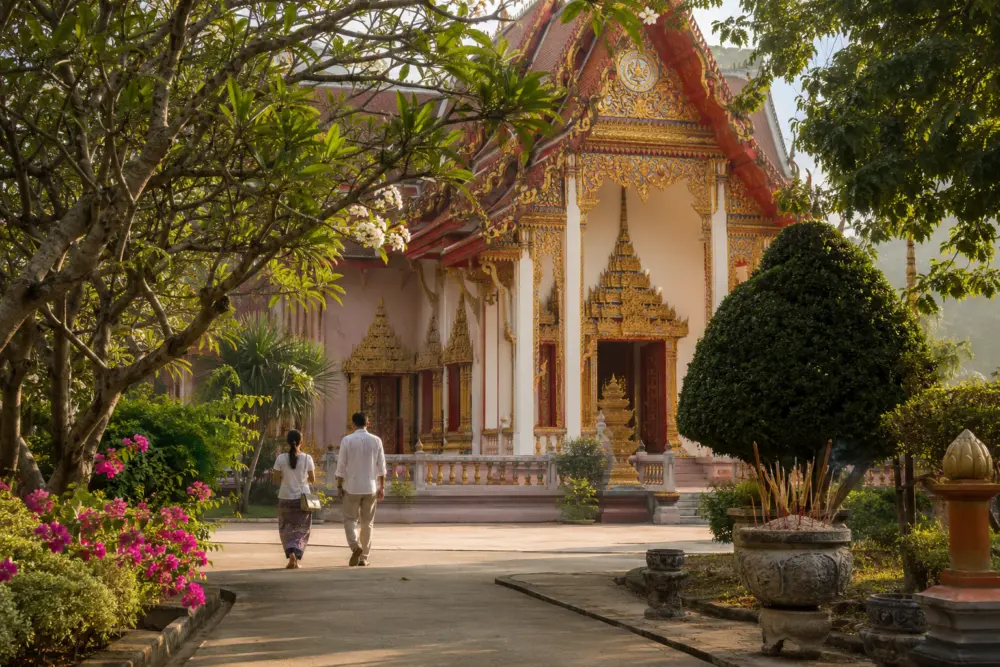
What Should You Wear to Wat Chalong?
Wat Chalong is an active Buddhist temple, so modest clothing is required.
- Cover your shoulders, chest and knees.
- Avoid sleeveless tops, very short shorts, short skirts and beachwear.
- Remove your shoes before entering temple buildings.
- Speak quietly inside religious areas.
- Do not touch Buddha statues or religious relics.
- Give people space while they are praying.
- Photography is generally permitted, but always follow signs and respect worshippers.
A simple rule works well: behave as you would when visiting an important place of worship in your own country.
When Should You Visit?
According to Wat Chalong’s current official visitor information, the temple is open daily from 7:00 a.m. to 5:00 p.m. and there is no entrance fee, although donations are welcome.
Early morning is particularly comfortable because temperatures are cooler and the grounds can feel quieter.
Allow around one to two hours if you want to explore without rushing.
Opening arrangements can change during ceremonies, festivals or special events, so checking current information before travelling is sensible.
How Can You Get to Wat Chalong?
Wat Chalong is on Chao Fa West Road in southern Phuket and is easily reached by car, taxi, private driver, Grab or Bolt.
If you are deciding how to travel around the island, our Phuket taxi, Grab, Bolt and point-to-point transport guide explains the main options.
Visitors driving themselves should also remember that Phuket traffic can be busy around Chalong. Leave extra time rather than planning several attractions too tightly together.
What Can You Combine with Wat Chalong?
Wat Chalong works particularly well as part of a cultural sightseeing day.
You can combine it with our Big Buddha Phuket guide to understand the difference between a historic traditional temple and one of Phuket’s best-known modern Buddhist landmarks.
Another good combination is the Phuket Old Town walking guide, where the story shifts from Buddhist architecture to Phuket’s colourful streets, old shophouses and multicultural heritage.
Sea Me Again Perspective
Many visitors arrive at Wat Chalong, photograph the colourful buildings and leave quickly.
We think it is more interesting to slow down.
Watch how local people pray. Look at the gold leaf gradually covering the statues. Walk through the chedi and study the murals. Listen to the sudden firecrackers and understand why they are being lit.
Once you know the story of the monks and the temple’s connection with Phuket’s history, Wat Chalong becomes much more than another beautiful building.
It becomes a small window into Phuket itself.
Frequently Asked Questions
Is Wat Chalong worth visiting?
Yes. It is particularly worthwhile for first-time Phuket visitors who want to understand Thai Buddhist culture and see a different side of the island beyond beaches and island tours.
Is Wat Chalong free to visit?
Yes. According to the temple’s current official information, there is no entrance fee. Donations and offerings are welcome but voluntary.
What is Wat Chalong’s official name?
Its official name is Wat Chaiyathararam, although almost everyone refers to it simply as Wat Chalong.
Why is Wat Chalong historically important?
The temple is closely associated with Luang Pho Chaem and Luang Pho Chuang, two revered monks remembered for supporting the local community and treating injured people during unrest in Phuket in 1876.
Can visitors see wax figures of the monks at Wat Chalong?
Yes. A small air-conditioned display room inside the reconstructed wooden residence contains lifelike wax figures of three revered former abbots: Luang Pho Chaem, Luang Pho Chuang and Luang Pho Gluem.
What is inside Wat Chalong’s large chedi?
The approximately 60-metre chedi contains a sacred fragment believed to be from the Buddha’s bone. Its interior also contains Buddha images and murals depicting the Buddha’s life.
Why can you hear firecrackers at Wat Chalong?
Some devotees light firecrackers in a designated structure as an expression of gratitude after prayers or wishes have been fulfilled.
How long should I spend at Wat Chalong?
Around one to two hours is comfortable for most first-time visitors.
What is the most important visitor rule?
Remember that Wat Chalong is an active place of worship. Dress modestly, remove your shoes before entering temple buildings and behave respectfully around people who are praying.