Thailand Entry Requirements 2026: 10 Rules Every Traveller Should Know
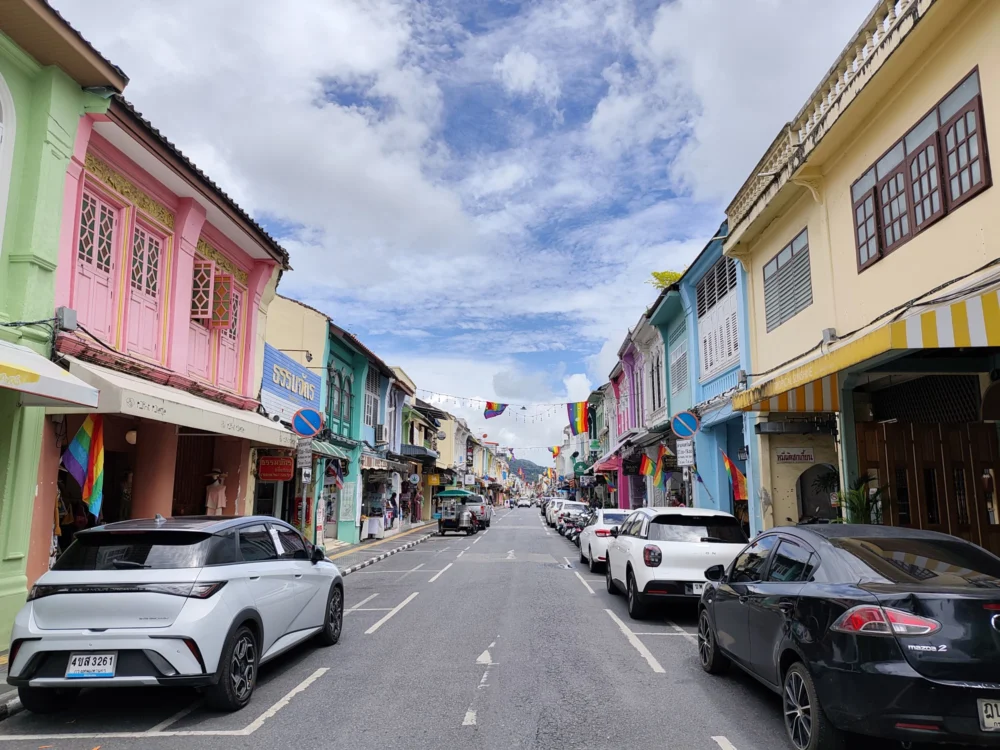
Thailand welcomes travellers with tropical islands, historic cities, distinctive food and warm hospitality. For visitors landing in Phuket, the holiday may begin with beaches, colourful Phuket Old Town, sunset viewpoints and boat trips across the Andaman Sea.

Before enjoying the destination, every international traveller should prepare the correct entry documents and understand Thailand’s immigration and customs rules.

Direct Answer
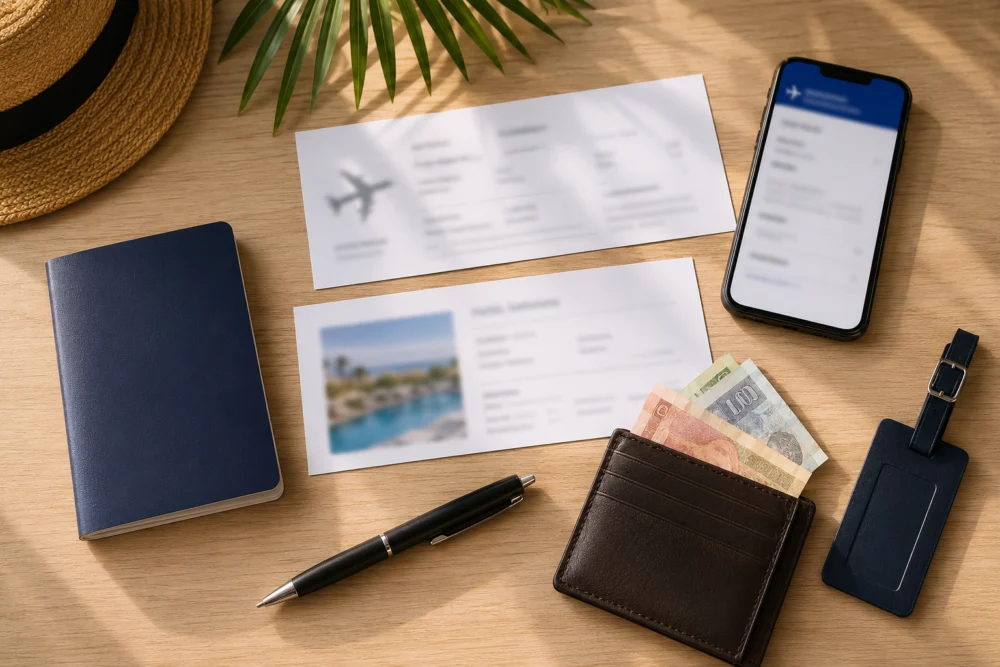
Most foreign visitors entering Thailand should prepare a passport with sufficient validity, the correct visa or entry eligibility, a completed Thailand Digital Arrival Card, return or onward travel evidence, confirmed accommodation information, evidence of sufficient funds when requested, and baggage that complies with Thai Customs rules.
Immigration officers may request supporting documents before granting entry. Completing TDAC or holding a visa does not automatically guarantee admission.
Important update — checked 20 July 2026: Thailand has approved changes to its visa-exemption and Visa on Arrival framework, but the measures remain pending publication in the Royal Gazette and will take effect 15 days after publication. Travellers should check the conditions for their nationality immediately before departure through official Thai government or embassy sources.
Rule 1: Travel With a Passport That Has Enough Validity
Use six months beyond your arrival date as the safe minimum for passport validity. Some visa and bilateral arrangements may have different conditions, but travellers should not assume that a passport expiring shortly after the trip will be accepted.
- Check that the passport is undamaged.
- Make sure the photograph and personal details are clear.
- Confirm that sufficient blank pages are available where required.
- Use the same name on the airline booking as shown in the passport.
- Travel with the same passport used for the visa or TDAC.
Rule 2: Check Your Visa Eligibility by Nationality
Thailand’s entry category depends on nationality, trip purpose and intended duration. A visitor may qualify for visa-exempt entry, Visa on Arrival, a tourist visa obtained before departure, or another visa suitable for business, study, family or long-term residence.
Do not rely only on airline posts, social media or an old travel article. Check the official Thailand e-Visa website or contact the Royal Thai Embassy or Consulate responsible for your country of residence. A tourist entry does not normally permit employment.
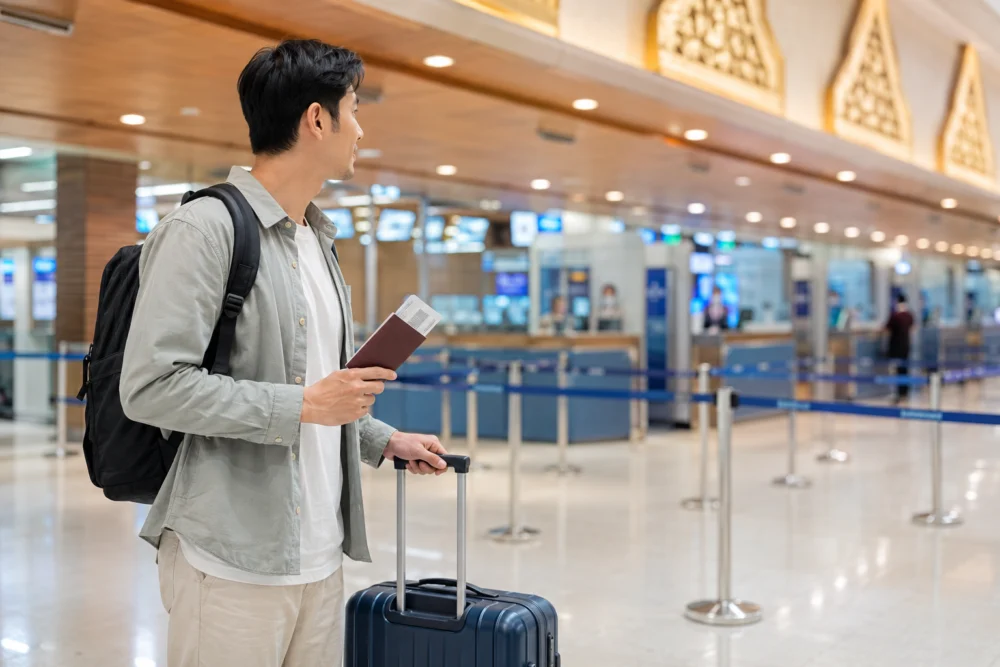
Rule 3: Submit the Thailand Digital Arrival Card
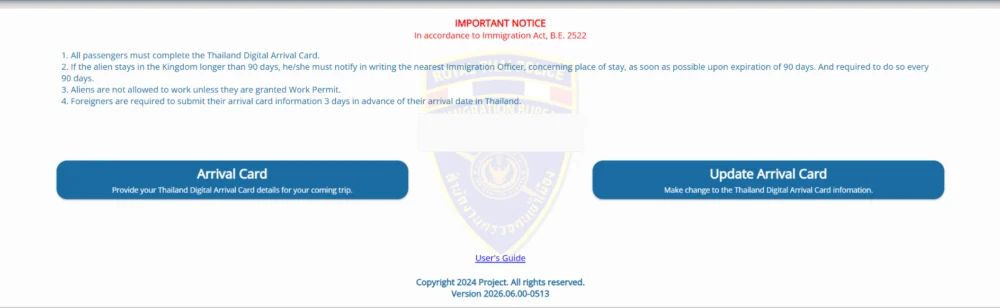
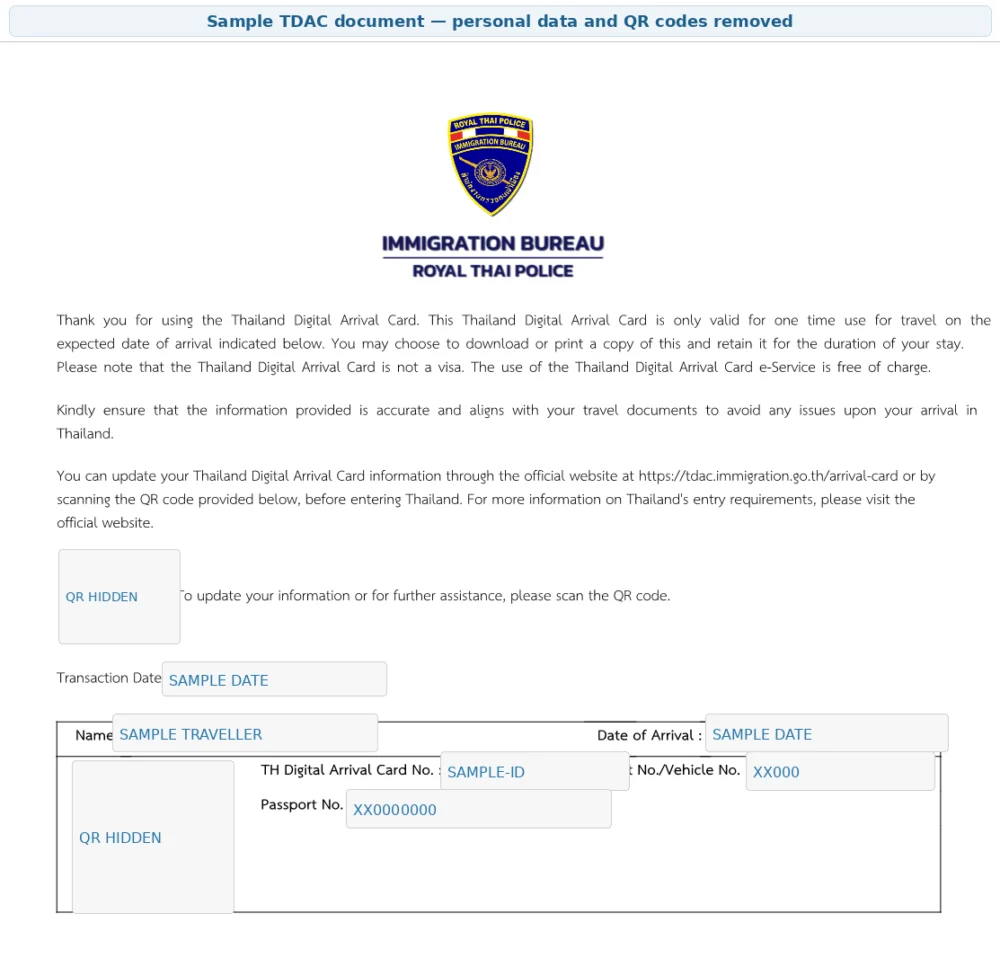
All non-Thai nationals entering Thailand are generally required to complete the Thailand Digital Arrival Card, or TDAC, before arrival. TDAC applies to entry by air, land and sea.
Submit it through the official Immigration Bureau system within the permitted three-day period before arrival. Prepare your passport, arrival details, first accommodation address, email and recent travel history.
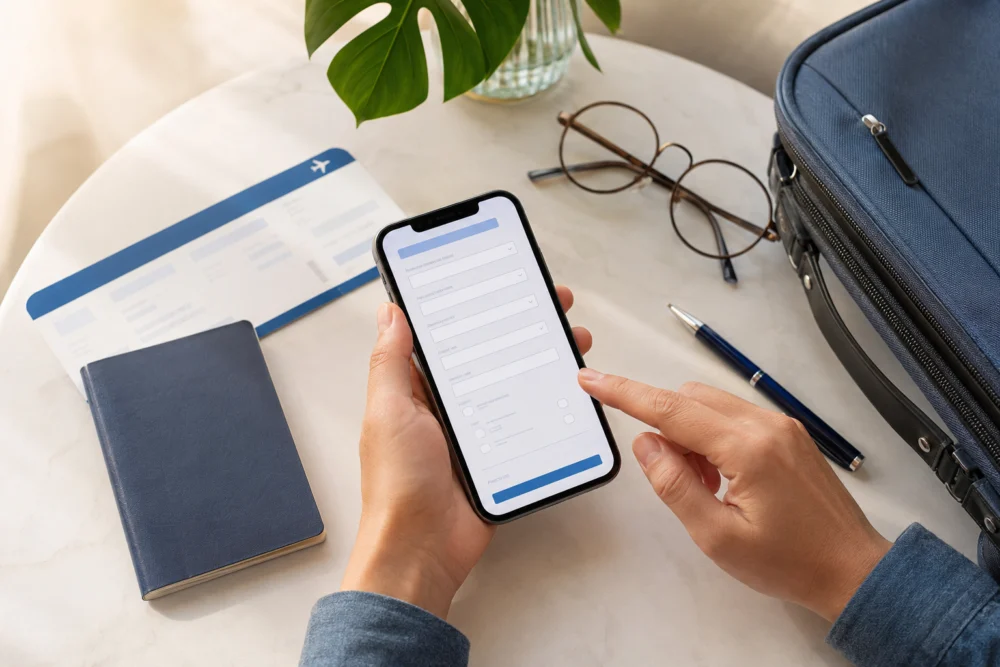
TDAC is not a visa and does not replace visa eligibility. Form information should be entered in English. For screenshots and complete instructions, use our Thailand Digital Arrival Card step-by-step guide.
Rule 4: Keep a Return or Onward Ticket Ready
Immigration officers or airline staff may ask how and when you intend to leave Thailand. Suitable evidence may include a confirmed return flight, onward international flight, international bus or train ticket, or a ship or ferry ticket leaving Thailand.
Your departure arrangements should comply with the period permitted by your visa or entry category. Arriving without evidence of departure can create problems at airline check-in or immigration.
Rule 5: Prepare Your First Accommodation Address
Keep your hotel reservation, villa booking or host address available in English. The information should include the accommodation name, complete address, province, district or area, telephone number and booking confirmation.
If you are staying in several places, prepare the address of your first accommodation after arrival.
Rule 6: Carry Evidence of Sufficient Funds
Thai immigration officers may ask visitors to demonstrate that they have enough money for their stay. Current official guidance lists different amounts according to entry category.
| Entry category | Individual | Family |
|---|---|---|
| Transit Visa, Visa on Arrival and certain visa-exempt cases | ฿10,000 | ฿20,000 |
| Tourist Visa and Non-Immigrant Visa | ฿20,000 | ฿40,000 |
Children under 12 are excluded from this requirement under the current reminder. Evidence may include Thai Baht, equivalent foreign currency or acceptable supporting financial documents. Requirements can vary by entry category, so check the latest official guidance before flying.
Rule 7: Make Sure Your Travel Story Matches Your Documents
Your answers at immigration should be truthful and consistent with your documentation. An officer may ask why you are visiting, how long you will stay, where you will stay, when you will leave, how you will support yourself, and whether you have visited Thailand frequently.
TDAC, flight details, accommodation and stated travel purpose should not contradict one another. Final admission remains subject to the immigration officer’s assessment.
Rule 8: Understand the Green and Red Customs Channels
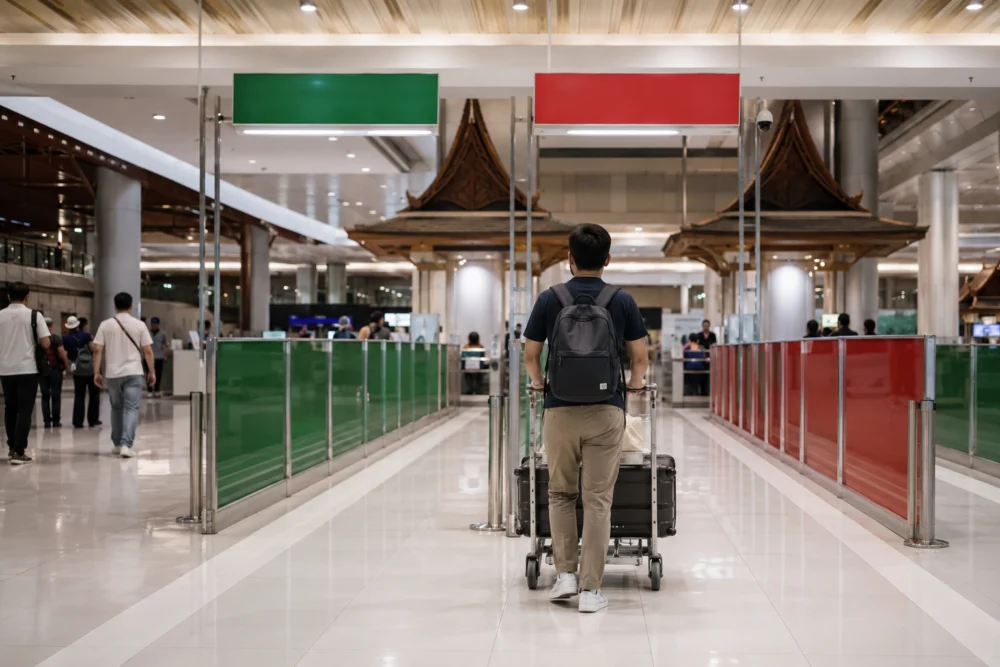
After immigration and baggage collection, arriving passengers pass through Customs. Use the green Nothing to Declare channel only when your belongings are within the duty-free allowance and you do not possess restricted or prohibited goods.
- Personal belongings in reasonable quantities valued at no more than ฿20,000 in total.
- No more than 200 cigarettes, or 250 grams of tobacco or combined tobacco products.
- No more than one litre of alcoholic beverage.
Use the red Goods to Declare channel if you carry dutiable, restricted or uncertain items. Keep receipts or invoices available where appropriate.
Rule 9: Do Not Carry Prohibited or Undeclared Restricted Goods
Examples of prohibited goods include narcotics, pornographic materials, counterfeit or intellectual-property-infringing goods, fake banknotes or coins, and protected animals or CITES-listed wildlife.
Restricted goods may require permission from another Thai authority. Examples include firearms and ammunition, plants, living animals, antiques and certain Buddha images. Do not assume that an item is legal to import simply because it was purchased legally in another country. If uncertain, contact Thai Customs before departure or declare the item on arrival.
Rule 10: Check Prescription and Controlled Medication
Keep personal medication in its original labelled packaging, carry a reasonable quantity for the trip and bring a medical certificate or prescription.
Ordinary non-controlled medication for personal treatment is generally permitted in quantities not exceeding 30 days of prescribed use. Controlled narcotic or psychotropic medication may require additional documents or advance permission. Certain psychotropic medicines exceeding a 30-day supply require a Thai FDA permit applied for at least 15 days before travel, while some substances cannot be imported at all.
Use the Thai FDA medication-checking service before travelling. Classification may depend on the active ingredient rather than the commercial drug name.
What Happens After Your Flight Lands?
- Prepare your passport and TDAC confirmation.
- Pass through Immigration.
- Collect checked baggage.
- Proceed through the appropriate Customs channel.
- Enter the public arrivals hall.
- Continue to your hotel or confirmed transfer.
Keep important documents accessible until you have fully completed the arrival process.
Thailand Entry Checklist
- Passport with sufficient validity
- Correct visa or confirmed entry eligibility
- TDAC confirmation
- Return or onward ticket
- First accommodation address
- Evidence of sufficient funds
- Travel insurance details
- Prescription or medication permission where required
- Customs-compliant baggage
- Digital and offline copies of essential documents
After Entering Thailand: Start Planning Phuket
Once the formalities are complete, Phuket offers beaches, local culture, island tours and sunset experiences. Explore the island’s cultural side with our Phuket Old Town walking guide or check the monthly Phuket sea-condition guide before planning an island trip.
Travellers looking for a straightforward first sea day can also review the Racha Island and Coral Island speedboat trip.

Frequently Asked Questions
Is TDAC the same as a Thai visa?
No. TDAC is an arrival-information form. It does not replace a visa, Visa on Arrival or visa-exemption eligibility.
Does everyone receive the same length of stay?
No. The permitted stay depends on nationality, entry category and current regulations. Check official guidance immediately before travelling.
Does a child need a TDAC?
Non-Thai children and infants generally require their own TDAC information. A parent or accompanying adult may complete it for them.
Do I need to carry cash when entering Thailand?
Immigration may request evidence of sufficient funds. Current guidance allows Thai Baht, equivalent foreign currency or supporting financial documents, depending on the circumstances.
What should I do if I am unsure about an item in my luggage?
Check with Thai Customs before travelling. When arriving with an uncertain or declarable item, use the red channel and ask an officer.
Can I bring prescription medication into Thailand?
Many ordinary medicines are permitted in reasonable personal quantities, but controlled narcotic or psychotropic substances may require a prescription, medical certificate or Thai FDA permit.
Final Advice
Thailand’s entry process is usually straightforward when documents are prepared in advance. Check your passport and visa eligibility, complete TDAC, keep supporting travel documents accessible and review your baggage before departure. Because visa and immigration rules can change, always make a final official check shortly before your flight.